



Why small businesses are dropping the green agenda as survival pressures rise
Cashflow is getting tight for many small businesses, so dropping the green agenda is now a logical survival step. That's quite understandable. This blog post looks at why priorities are shifting and how firms can still move towards net-zero targets without risking business survival ... Small businesses drop the, Green agenda, Bills rising, Survival is the goal Small businesses drop the green agenda when the numbers stop adding up, and lately the arithmetic has been brutal. With the cost-of-living crisis squeezing customers and raising wage expectations, many owners are treating liquidity and resilience as the only metrics that matter in the next quarter. That isn't a rejection of values so much as a reset of what keeps the doors open and the lights on!The current mood is shaped by relentless increases in overheads rather than ideology. Energy bills, finance costs, rent reviews, insurance premiums, and supply chain price rises have turned planning into triage, so 'nice-to-have' projects are the first to fall by the wayside. When survival of the business is on the line, the definition of progress narrows to paying staff on time, keeping core customers, and protecting working capital.The wider corporate backdrop has not helped confidence. High-profile pivots away from underperforming green investments send an unhelpful signal to smaller firms that sustainability is optional when margins are thin. When global institutions shift their stance on net-zero targets, it can feel to SMEs like the goalposts have moved again, and that uncertainty is costly. Even so, it is too simplistic to assume small businesses are dropping the green agenda because they no longer care? I don't think so. Most owners understand that small business sustainability is ultimately about reducing exposure to volatile inputs and future regulation, not about impressing anyone. The issue is timing: when cash is tight, firms prioritise initiatives that pay back quickly and predictably. That is why the conversation needs reframing!If a change reduces energy consumption, cuts waste, or prevents downtime, it can support business survival and still move the firm in the right direction. Within my own client base, the businesses that keep momentum tend to choose improvements that are cost-effective, measurable, reversible if needed, and aligned with core operations rather than classed as separate 'sustainability projects' that are done simply to look good to the outside world. There is also a genuine capability gap. Many SMEs are willing to act, but lack the time to compare tariffs, calculate payback, negotiate with landlords, or gather data for lenders and customers who are increasingly asking for emissions information. When small businesses drop the green agenda, it is often because the administrative load lands on the same person who is also doing sales, payroll, and compliance.I feel that postponement is not abandonment. A firm can keep net-zero targets on the horizon while sequencing decisions in a way that respects its cashflow. This might mean choosing efficiency measures during routine replacements, tightening procurement standards when contracts renew, or using customer demand as the trigger for deeper reporting rather than trying to do everything at once. Banks, suppliers, and larger clients can help by making the pathway simpler and less risky:
Then, small business sustainability becomes a commercial upgrade instead of a moral test. In that environment, cost pressure becomes a reason to innovate, not a reason to retreat. In the end, small businesses drop the green agenda | ||||||||||||||||||||||||||||||||||||||||||||||||||||||||||||||||||||||||||||||||||||||



Would you like to know more? |
If anything I've written in my blog post resonates with you and you'd like to discover more of my thoughts about small businesses ditching the green agenda, then do call me on 01908 774320 and let's see how I can help you. Don't forget to stay updated with our daily social media posts on Facebook. |
Share the blog love ... | |||||||||||||||||||||||
#smallbusinessesdropgreenagenda #SMEs #Sustainability #NetZero #UKBusiness #Cashflow |


About Roger Eddowes ... | ||
|
More blog posts for you to enjoy ... | ||
 | Inheritance Tax on pensions: What the 2027 rules mean for your family The rules surrounding Inheritance Tax on pensions are changing in 2027, and anyone hoping to leave their pension savings to loved ones should be aware of what lies ahead ...... | |
 | The 60% Tax Trap: Why Earning More Could Leave You Worse Off Most people assume that earning more means taking home more money. Unfortunately, the 60% tax trap reminds us that the UK tax system isn't always straightforward. For higher earners approaching £100,000, a pay rise or bonus c... | |
 | Budget tax changes: What could they mean for businesses and investors? As the next budget approaches, speculation about tax changes is gaining momentum. The Chancellor faces a difficult balancing act: managing public finances, encouraging economic growth, and avoiding further pressure on busines... | |
 | Working lunch tax rules: When do sandwiches become a tax problem? There is something wonderfully British about gathering colleagues around a table, ordering a few sandwiches and calling it a productive meeting. After all, everyone needs lunch, and discussing business while eating seems perf... | |
 | State Pension Triple Lock changes: What could they mean for your finances The recently announced State Pension Triple Lock changes mark a significant shift in how the State Pension could increase in the future. The existing triple lock will remain in place until April 2030, but after that the earni... | |
 | A Director's Loan Account is useful, but it isn't your personal ATM A director's loan account can be a normal, useful part of running a limited company. It records money moving between a director and their business that isn't salary, a dividend or reimbursement of a genuine business expense .... | |
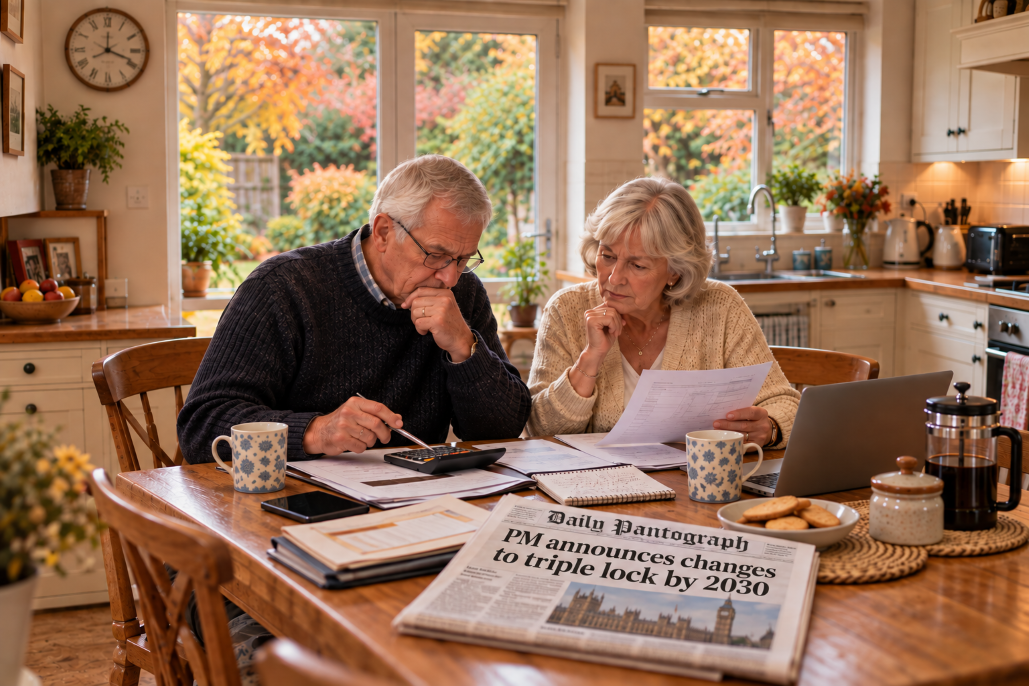 | Is the State Pension triple lock sustainable for the long term? The state pension triple lock has played an important role in protecting pensioners from falling behind as wages and prices rise. For many people, particularly those with little other retirement income, that protection matter... | |
 | Cybersecurity risks for businesses: Why basic protection matters more than ever Cybersecurity risks for businesses continue to evolve, and recent incidents show that it is no longer enough to think of cybersecurity as something that concerns only large organisations or technology companies. The ways a bu... | |
Other bloggers you may like ... | ||
 | What happens if you don't check in with YourPING? Posted by Steffi Lewis on https://www.yourping.uk Life gets busy, and even simple things can slip our minds. You might be enjoying a long conversation with a friend, working in the garden, watching a ... | |
 | Are you an overseas visitor looking to stay in Milton Keynes? Posted by Emily Freeman on https://blog.shortstay-mk.co.uk Overseas visitors seeking a base in Milton Keynes will find we offer an exceptional range of serviced accommodation tailored to their needs. Discover ... | |
 | Turning setbacks into opportunities: How difficult times can lead to new beginnings Posted by Dave Cordle on https://blog.davecordle.co.uk Life doesn't always go according to plan, does it? Sometimes events happen that completely knock us off course, whether that's redundancy, a business ... | |
 | How charities and community groups can use our daily check-in service Posted by Steffi Lewis on https://www.yourping.uk Charities and community groups do extraordinary work supporting people who might otherwise feel isolated, overlooked, or disconnected. Whether helping ... | |