








+44 (0) 1908 774320
   
Roger Eddowes

Essendon Accounts & Tax

Home of the Business Godparent ...

Understanding the 31st July Deadline for Paying Income Tax and National Insurance

Roger Eddowes

CREATED BY ROGER EDDOWES

Published: 07/07/2025 @ 09:00AM

#SelfEmployedTaxTips #IncomeTaxDeadlines #MinimisingTaxLiabilities #PaymentsOnAccount #TaxRequirements

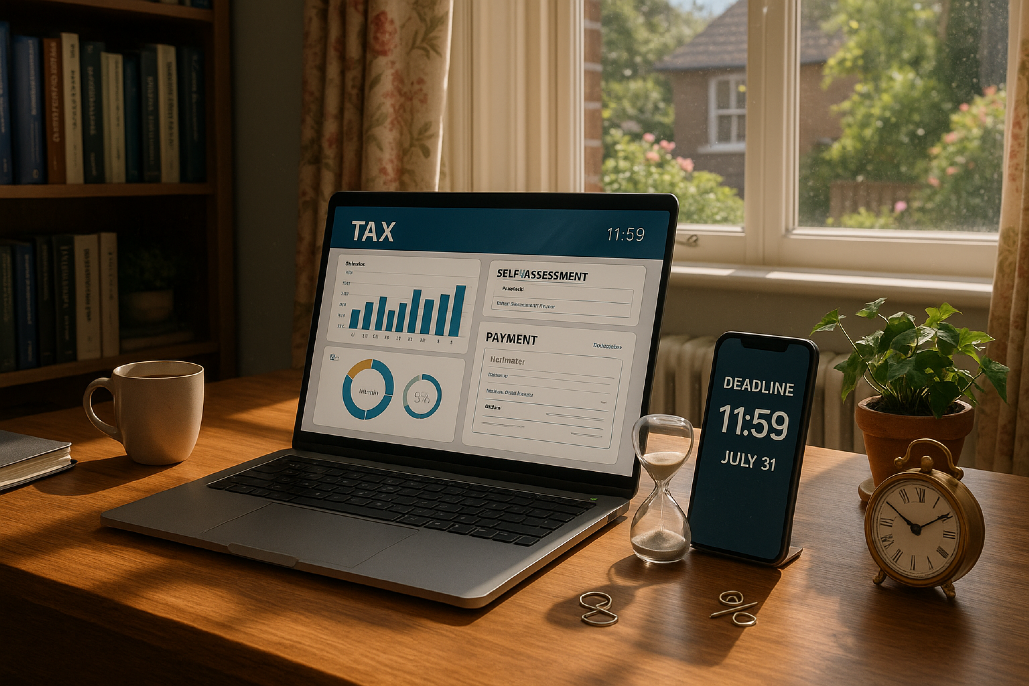
Although the 31st January is the usual date for paying Income Tax and National Insurance contributions in full, for many self-assessment taxpayers, the 31st July is another vital date to remember for those who need to make a Payment on Account ...

Deadline looming near, Taxes and NIC to be paid, Wallet feeling light

Deadline looming near, Taxes and NIC to be paid, Wallet feeling light

As the 31st July deadline approaches, self-employed taxpayers must take proactive steps to ensure they meet their obligations under the self-assessment (SA) system. The importance of this specific date is underscored by the requirement for some taxpayers to make a second payment on account (POA).

This POA is based on their prior year's income tax
and Class 4 National Insurance contributions!

Taxpayers should first ascertain whether they are required to make a POA by reviewing their 2023/24 self-assessment tax return. If they have submitted their return, they can easily access their online account or self-assessment statement, which will indicate their POA obligations.

The necessity to comply with the 31st July deadline for paying income tax and NIC stems from the fact that each POA equals 50% of the taxpayer's total SA liability from the previous tax year. Therefore, any discrepancies in income or tax liability for the current year become crucial.

In the lead-up to the deadline, it is prudent for taxpayers to evaluate whether they can make a claim to reduce their Payment on Account. For individuals anticipating lower income or other changes in their financial situation, this option may reduce the amount they owe.

For example, a self-employed individual who paid a total of £6,504 in the previous year might estimate their liability for the current year at £5,052. By making a claim to reduce their payments to £2,526, they can ease their financial burden and adjust their expenses to their current capacity.

Taxpayers must also consider the consequences of failing to comply with the July 31st deadline. HMRC charges interest on late payments, currently set at 8.25%. Taxpayers can incur penalties if they submit incorrect claims, making it imperative to ensure accuracy and compliance. Should a claim to reduce the POA be excessive, interest will be charged on the underpayment. Any overpaid taxes will be refunded with interest at a rate of 3.25%.

Given the current economic climate, where fiscal drag has led to more taxpayers being liable for making payments on account, the importance of paying the correct amount at the right time cannot be overstated. The latest figures from the Office for National Statistics reflect a significant increase in self-assessment tax receipts, heightening the need for preparation and adherence to HMRC's compliance standards.

The 31st July deadline for paying income tax and NIC
needs careful planning and consideration!

By understanding payment obligations, assessing eligibility for claims, and adhering to best practices, taxpayers can navigate their responsibilities with greater ease and confidence. Awareness of these elements is essential to foster an informed taxpayer community.

As always, the Business Godparent stands ready to help you.

Until next time ...


ROGER EDDOWES
Join our mailing list! Click here and be one of the first to know when we publish a new blog post!


Would you like to know more?

If anything I've written in my blog post resonates with you and you'd like to discover more of my thoughts about the 31st July deadline for paying income tax and NIC, then do call me on 01908 774320 and let's see how I can help you.

Don't forget to stay updated with our daily social media posts on Facebook.

Share the blog love ...

Share this to FacebookBuffer
Share this to FacebookFacebook
Share this to TwitterTwitter
Share this to Linkedin (popup window)Linkedin
Share this to Pinterest (popup window)Pinterest
Share this to WhatsApp (popup window)WhatsApp

#SelfEmployedTaxTips #IncomeTaxDeadlines #MinimisingTaxLiabilities #PaymentsOnAccount #TaxRequirements

About Roger Eddowes ...

Roger Eddowes 

Roger trained at Edward Thomas Peirson & Sons in Market Harborough before working at Hartwell & Co, followed by Chancery, as a partner. He started Essendon Accounts and Tax with Helen Beaumont in 2014 as a general practitioner with a hands-on approach.

Roger loves getting his hands dirty, working with emerging, small-to-medium and family businesses to ensure they receive the best possible accountancy advice. Roger utilises an extensive network of business contacts to leverage the best guidance and practical solutions.

More blog posts for you to enjoy ...

Click here to view this blog post


Is the State Pension triple lock sustainable for the long term?

The state pension triple lock has played an important role in protecting pensioners from falling behind as wages and prices rise. For many people, particularly those with little other retirement income, that protection matter...

Click here to view this blog post


Cybersecurity risks for businesses: Why basic protection matters more than ever

Cybersecurity risks for businesses continue to evolve, and recent incidents show that it is no longer enough to think of cybersecurity as something that concerns only large organisations or technology companies. The ways a bu...

Click here to view this blog post


UK business growth needs certainty, not just good intentions

There has been plenty of discussion about UK business growth recently, and the Chancellor has now given us some indication of the direction the Government intends to take in the October Budget ......

Click here to view this blog post


Why the cost of doing business is holding back growth

Growth is talked about constantly, but I think we sometimes overlook something rather obvious. Businesses need the confidence and financial headroom to invest before meaningful growth can happen. Right now, the cost of doing ...

Click here to view this blog post


The soft skills employers look for are becoming more important

Qualifications and technical experience will always matter when businesses recruit new people. However, recent research highlighted by the BBC suggests that the soft skills employers seek are becoming increasingly important t...

Click here to view this blog post


Five practical ways to boost UK economic growth

There is no shortage of political discussion about UK economic growth, but the more important question is what must change to achieve it. Governments can publish strategies and promise reform, but sustainable growth depends o...

Click here to view this blog post


Companies House accounts filing changes: Why 2028 is closer than you think

The Companies House accounts filing changes coming into force from April 2028 may sound comfortably distant, but I think businesses would be wise to start understanding them now. The reforms will change both how company accou...

Click here to view this blog post


Practical mental health tips for business leaders

Running a business can be rewarding, but it can also put considerable pressure on the person in charge. These mental health tips for business leaders can help owners and managers protect their well-being while continuing to m...

Other bloggers you may like ...

Click here to view this blog post


Why YourPING is more than just another app

Posted by Steffi Lewis on https://www.yourping.uk

It would be easy to describe YourPING as an app, but that doesn't really explain what we're trying to achieve. The technology is simply the mechanism ...

Click here to view this blog post


Accommodation for business travellers in Milton Keynes

Posted by Emily Freeman on https://blog.shortstay-mk.co.uk

Finding the right accommodation for business travellers in Milton Keynes isn't just a matter of comparing nightly rates. When you're visiting for a fe ...

Click here to view this blog post


Are you feeling unfulfilled at work? It may be time for a change

Posted by Dave Cordle on https://blog.davecordle.co.uk

Sometimes there isn't anything obviously wrong with your job. You turn up, do what is expected of you, get paid and repeat the process the following w ...

Click here to view this blog post


What is a daily reassurance check in and how does it work?

Posted by Steffi Lewis on https://www.yourping.uk

A daily reassurance check-in is a simple way to let someone know you are OK. At an agreed time each day, you receive a check-in and respond to confirm ...

© 2026 by Roger Eddowes

All rights reserved


All content on this blog, including but not limited to text, images, videos and audio, is protected by copyright. No part of this blog may be reproduced, copied, distributed, or otherwise used without the prior written consent of the author. Unauthorised use constitutes a breach of intellectual property rights.

Please note that many elements of this blog have been created using Artificial Intelligence (AI). As such, content may not always reflect verified facts or professional advice. The information provided is for general interest only and should not be relied upon as a sole source for making decisions, financial or otherwise. Readers are strongly advised to seek independent advice from qualified professionals appropriate to their country and situation.

The author of this blog, YourPCM Limited, and its directors, employees, and authorised agents accept no liability for any loss, harm, or consequence arising from the use or interpretation of content found on this site.

The sblogit.com platform is provided on an “as is” basis. By continuing to view or interact with this blog, you acknowledge and accept these terms. If you do not agree with any part of this notice, please cease using this site immediately.

YourPCM Limited is a company registered in the UK and operates exclusively under the jurisdiction of the laws of England and Wales.